

The impact of COVID-19 on the global economy is undeniable. The oil and gas industry also felt the impact with crashing oil prices, unstable supply chains, and more. More than just buying industrial equipment or replicating processes on drilling platforms is required to ensure oil and gas business scalability.
Adapting to market fluctuations and evolving company needs is only possible by adjusting internal processes and operating models and developing organizational agility.
Oil and gas companies are rethinking their operating models and decision-making strategies with game-changing digital technologies.
According to a report, investing in digital solutions can help oil and gas companies save up to 5% on operational costs and 20% on capital expenditures.
Digital maturity unleashes new growth opportunities, makes the transition easier to a low-carbon future (amid tighter green energy norms), and creates long-term value not limited by quick wins, such as cost savings, incremental efficiency gains, and process optimization.
In an industry with heavy capital investments and operations spanning several regions, digital technologies can help uncover new value streams, increase production, and boost cost savings.
Several CIOs surveyed in the O&G industry have expressed interest in building a change leadership culture driven by digital transformation.
Read on to learn more about digital and other impactful O&G industry trends of 2022.
Table of Contents
Top 20 Oil and Gas Industry Trends [2022]
Artificial Intelligence (AI) and Virtual Reality (VR)
Big Data and Advanced Analytics
Data Management as a Service (DMaaS)
Manufacturing Execution Systems (MES)
Wrapping Up
Top 20 Oil and Gas Industry Trends [2022]
AI and IoT have had the biggest impact on the oil and gas industry. While Blockchain solutions provide visibility and transparency across the O&G value chain, augmented and virtual reality technologies boost worker safety and enable remote operations.
Let us dive deep into the trends transforming the O&G industry worldwide (listed in alphabetical order):
#1 3D Modeling & Visualization
Realistic representations of subsurface reservoirs and other oil and gas equipment are possible with 3D modeling and high-quality visualizations. For example, 3-D seismic, linear program modeling helps deliver operational efficiencies across the value chain and discover new hydrocarbon resources.
Using 3D modeling in combination with historical production data, oil and gas engineers can optimize operations planning and production through data based on simulation of the production and injection phases during a reservoir’s lifecycle.
In addition, 3D modeling lowers costs, reduces risks, and improves O&G asset performance.
O&G Cloud: The Singapore-based startup provides XXSim—a cloud-based platform that consists of thermal, black oil, and compositional reservoir simulation modules. XXSim enables reservoir engineers to predict reservoir performance and recommend relevant inputs to maximize reservoir production.
Maillance: The French startup offers oilfield.ai—a cloud-native solution to automate reservoir modeling and visualization and enable real-time decision-making for petroleum and reservoir engineers. Oilfied.ai combines AI-based analytics, geoscience, and physics to optimize production and predict reserve estimates.
#2 4D Seismic Technology
4D seismic technology involves acquiring, processing, and interpreting 3D seismic surveys (3D seismic data) at different times over the same area to assess dynamic changes like fluid movement and saturation in a producing hydrocarbon reservoir.
4D seismic technology makes deep-sea exploration accessible to O&G companies and allows geologists and petroleum geophysicists to map out potential exploration reserves without spending large amounts of money.
4D seismic technology uses augmented or virtual reality software to provide a “flyby” experience from above an oil rig and a 3D visualization during drilling operations with other useful information on mineral extraction sites.
#3 Additive Manufacturing
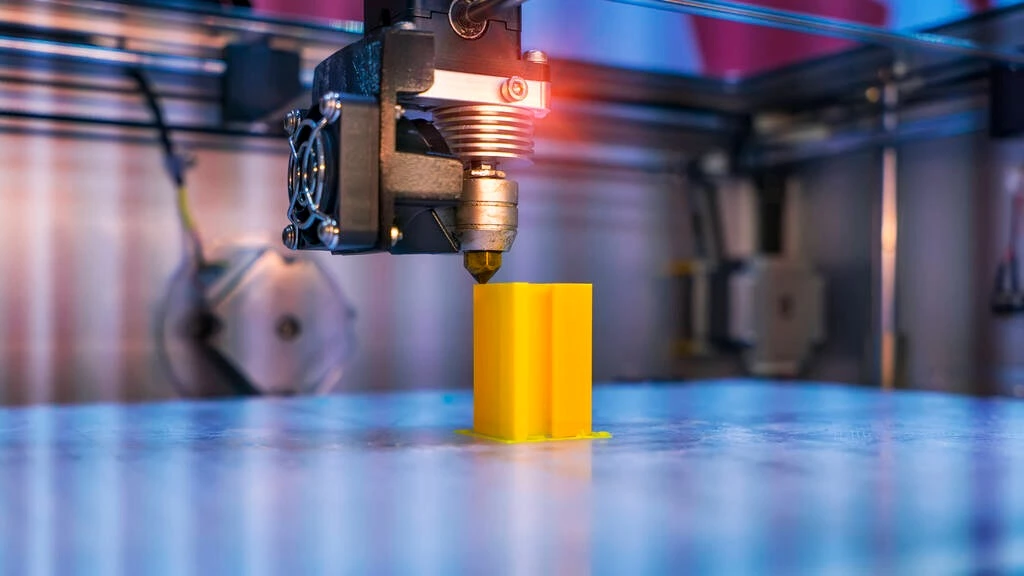
Additive manufacturing (AM) or additive layer manufacturing (ALM) is the industrial name for 3D printing. Additive manufacturing facilitates the production of parts on-site to reduce traditional supply chain costs and time massively.
3D printing is gaining momentum in the O&G industry, with several major players like Bake Hughes, BP, GE Oil & Gas, Siemens Energy, and Shell undertaking projects at 3D printing facilities/labs.
For example, Shell used a 3D printed scale model to validate structure design and avoid potential construction issues and cost overruns. Additive manufacturing is revolutionizing parts prototyping in the O&G industry and providing cost savings while developing more efficient ways to develop and maintain equipment.
#4 Artificial Intelligence (AI) and Virtual Reality (VR)

Digital technologies have become instrumental in extracting actionable insights from large, siloed data sets—it is now possible to utilize AI-driven data insights to improve site efficiency and worker productivity. Earlier, many companies struggled to deal effectively with data loss and outdated and unlinked data sets.
AI-enabled platforms offer insights derived from cognitive, predictive, and prescriptive analytics to help petroleum engineers and O&G industry managers implement ROI-increasing exploration and production (E&P) ideas on the field, optimize upstream O&G resources, and solve complex problems in O&G operations.
Reality technologies like augmented reality headsets allow field workers to inspect dangerous areas without being physically present by using their smart headset devices.
Nesh: The US-based startup’s virtual assistant “Nesh” collects data from multiple sources and uses natural language processing (NLP) to answer industry-related questions. In addition, the AI-powered chatbot enables field operators to make fast and informed decisions based on relevant insights from on-site data.
NeuDax: The US-based startup’s AI solutions include advanced analytics and data science, which support field engineers in the confident and efficient development of their resources.
NeuDax’s AI platform FracDax includes deep learning and reinforcement learning (RL) to assist oil and gas operators in the analysis of thousands of oil-well parameters, assessment of completion options, and formulation of refracturing solutions.
Virtual Reality (VR)
Immersive technology solutions, such as Augmented Reality and Virtual Reality (AR/VR), Extended Reality (XR), and Mixed Reality (MR) combine real and virtual environments to increase efficiency and reduce errors.
Downhole imaging, remote monitoring, and virtual training help Exploration & Production (E&P) companies manage plant maintenance and worker training and make safety improvements.
How does virtual reality serve as a valuable tool? Virtual reality provides immersive spatial representations of data to make critical decisions better and faster in a range of scenarios—from off-site orientation to remote issue diagnostics.
It can be used to conduct virtual reality site visits, understand existing site conditions, and enable teams to be better prepared in an emergency, such as viewing a remote and potentially hazardous oil and gas site. Virtual reality improves productivity and outcomes and reduces site exposure hours by offering a scalable virtual reality solution for oil and gas assets.
#5 Big Data and Advanced Analytics

Daily O&G operations generate large volumes of unstructured data. With advanced analytics and Big Data platforms to analyze production and performance data, it is possible to optimize O&G operations, reduce production costs, and increase ROI.
The usefulness of advanced analytics in the O&G industry goes beyond asset management and seismic data interpretation. Other significant applications include:
- Enhancing drilling rig efficiency
- Ensuring human safety
- Improving reservoir characterization and simulation
- Improving shipping performance by predicting the propulsion power
Additionally, predictive analytics reduces downtimes and the costs of unforeseen reactive maintenance, especially for critical equipment and large-scale maintenance projects.
Welligence: The US-based startup specializing in Big Data and AI solutions provides engineers and energy operators with data analytics dashboards, production forecasts, valuation models, and visualization tools to develop better strategies at an asset or a company level.
Phoenix RDS: The British startup uses data analytics to provide drilling, production, and waterflood optimization solutions to O&G asset owners and operators. In addition, the company offers reservoir modeling algorithms and optimization workflows for enhanced oil recovery (EOR).
#6 Blockchain
Blockchain is the way when it comes to providing security and transparency to O&G gas documents and operations. O&G companies can use distributed ledgers to verify contractors and employees and maintain smart contracts. Blockchain finds other uses in:
- Hydrocarbon fleet tracking
- Intragroup billing
- Invoice automation
- Joint venture accounting
- Post-trade settlements
Block Gemini: Block Gemini uses Blockchain, AI, and IoT to provide transparency into complex O&G processes and enable full digital transformation of the O&G industry through demand pricing, forecasting, planning, transportation, and warehousing.
Moreover, O&G companies can use Block Gemini’s business solutions to share and coordinate plans digitally, increase overall operational efficiency, and make strategic decisions.
Ondiflo (US-based startup): Ondiflo uses Blockchain and IoT to develop Oilfield Transaction Automation. Apart from automating the procure-to-pay process for fluid hauling by leveraging sensor data, the company’s solution increases operational efficiency while reducing the O&G carbon emission footprint.
#7 Cloud Computing

Cloud services are indispensable for efficiently processing oilfield data and scaling data management and storage at any O&G business development stage. It is well known that cloud-based enterprise content management systems help digitize day-to-day paper documents and legacy oil records.
Using cloud technology and software applications improves operational efficiency, reduces overall costs, and frees up expensive local memory and computing capacities for O&G companies. Cloud computing not only works well for local computing and storage but also increases data availability and accessibility.
Furthermore, cloud infrastructure provides the flexibility of only paying for the resources a company uses and expanding storage according to business requirements (such as cloud storage expansion for a new exploration site). So, buying cloud services is much more convenient than acquiring and installing on-premises hardware.
Engage: The US-based startup helps O&G operators and vendors increase productivity, reduce costs, and save time with “ENGAGE”—a cloud-native digital field management platform.
ENGAGE is a complete field solution that integrates accounting software, IoT devices, and production data to automate jobs and provide transparency into oilfield operations. Moreover, it uses Digital Field Tokens to enable data analytics-based reporting, predictive scheduling, and real-time tracking.
inerG: The US-based startup provides PetroBase Pro and PetroBase Explorer—O&G data management tools that enable well data analytics and end-to-end petroleum asset management.
Additionally, the company’s cloud-based O&G reserves and economic evaluation software improves the accuracy and efficiency of A&D (acquisition and divestiture) evaluation, integration, and O&G asset management.
#8 Connected Field Workers
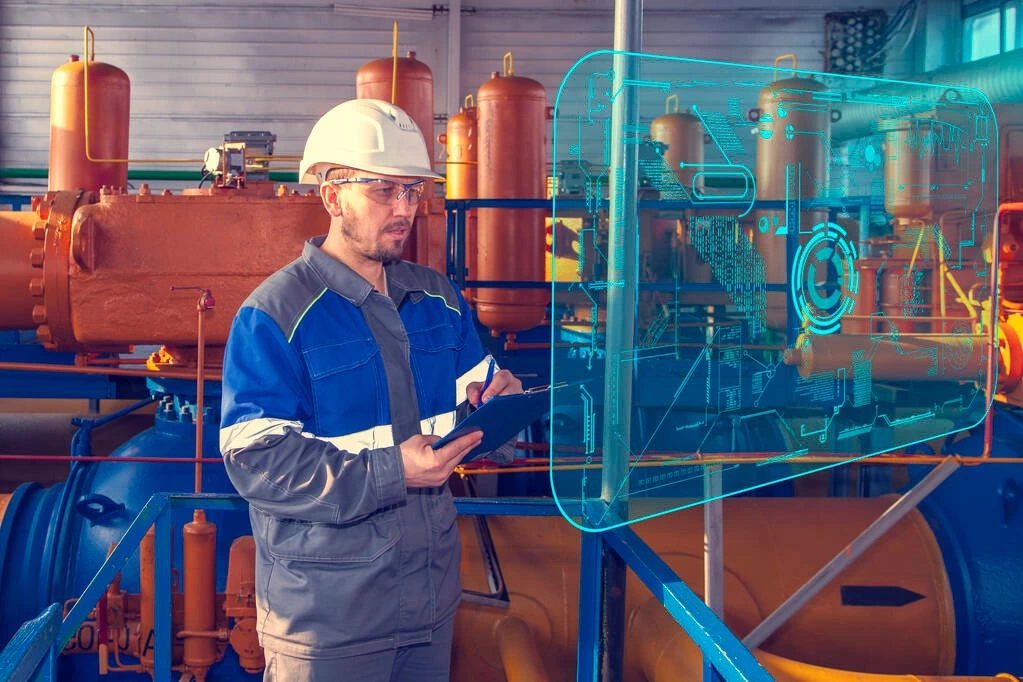
Ensuring employee safety and managing remote operations have always been major challenges for the O&G industry. However, connected worker technologies are becoming critical in:
- Building an agile and flexible work environment.
- Enabling workers to conduct inspections and collect data, accurately and safely.
- Integrating data exchange & data capture solutions with hardware solutions, such as drones, smart glasses, ATEX (Atmosphere EXplosible) devices, and non-ATEX devices.
- Simplifying work processes (such as eliminating paper-based processes)
- Increase work quality.
A connected field worker can respond to actions in real time and play a key role in better decision-making with click-distance access to information and precise data visualization.
#9 Cybersecurity

Cybersecurity solutions are indispensable for enhancing the safety of upstream, midstream, and downstream O&G operations because cybersecurity attacks can result in the loss of confidential information or OT (operational technology) disruption.
Cybersecurity centers around a three-level approach of assessing, protecting, and responding in the event of a cyber threat to improve an O&G company’s OT cyber readiness. Major cyber solutions focus on diverse safety aspects, including:
- Application whitelisting
- Baseline compliance assessment
- Cyber gap assessment
- ICS security event monitoring
- Incident and disaster recovery plan preparation and testing
- Malware pattern updates
- Network anomaly detection
- Network intrusion detection system
- Secure remote access
- Vulnerability assessment
#10 Data Management as a Service (DMaaS)
Processing and transforming terabytes of energy company data into actionable insights is costly and time-consuming due to the complex nature of O&G enterprise data management.
DMaaS is a cloud-based solution that enables O&G organizations to manage and protect enterprise data, as well as structure and visualize data for easy understanding and further navigation.
Complete digitization of all assets and end-to-end data management support make it easier to leverage various data sources across all time zones.
Moreover, DMaaS is highly useful for saving paperwork and operating & workforce costs and leveraging information to the best possible level. Instead of spending time on lengthy processes, employees are freed up to focus on value-generating tasks.
#11 Digital Twins
A digital twin is an exact replica that serves as a virtual representation of a physical object or process and is beneficial in integrating human activities, internal systems, and external ecosystems.
A digital twin provides an analytical what-if model to validate new approaches and frameworks and identify relevant risk mitigation strategies.
Apart from health, safety, and environmental improvements, the benefits of using digital twins include:
- Time-to-first-oil acceleration
- Production acceleration
- Operating expense reduction
- Recovery rate increase
#12 Employee Empowerment Programs