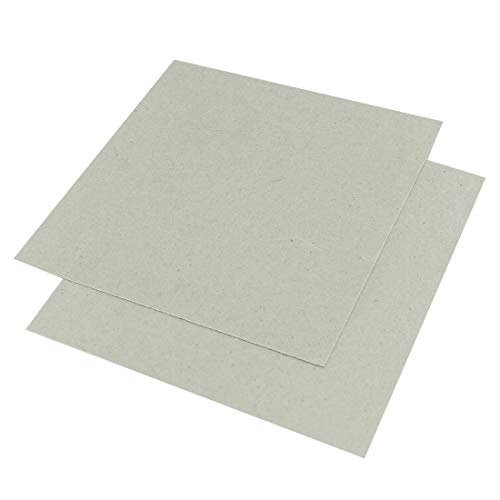


When you look at the final products and uses of mica and mica sheet, they might appear to be a far distance from mica in their natural condition. Mica in sheet form is one of the most versatile and extensively used types of processed mica, and this article explains how mica sheets are manufactured.
Mica sheets are available in many grades to suit a wide range of applications. They can be flexible or stiff, as well as composite or pure in composition.
Let's have a look at them.
Natural Mica
Mica occurs naturally as a silicate mineral in igneous rock, which is made up of layers of volcanic material. Mica is crystallized at this point and is mined to extract it.
These mica crystals are found in irregular blocks, and while there are 37 distinct types of natural mica, the phlogopite and muscovite forms are widely employed in a variety of products and industries.
Mica is found in abundance in coarse-grained igneous rocks known as pegmatite. Mining demands a high level of accuracy to avoid damaging the crystals when removing them.
These mica crystals are found in irregular blocks, and while there are 37 distinct types of natural mica, the phlogopite and muscovite forms are widely employed in a variety of products and industries.
Mica is found in abundance in coarse-grained igneous rocks known as pegmatite. Mining demands a high level of accuracy to avoid damaging the crystals when removing them.
Mica crystals occur in different layers and are classified as sheet silicates. This speeds up the process of converting raw mica into mica sheets.
Mica sheets are available in both flexible and stiff grades. This lends mica sheets certain adaptability in their numerous applications.
In both flexible and stiff mica sheets, phlogopite (green) and muscovite (white) mica are utilized. AS&P offers them in a variety of sizes. Phlogopite mica is softer, but muscovite mica has high dielectric properties as well as chemical resistance.
How Do Composite Mica Sheets Get Their Shape?
Mica is mixed with other minerals in composite mica sheets to increase its inherent strength and versatility.
One method is to first crush down the mica into particles with micro-pulverizing equipment. When these particles are mixed with water and a colloid material, they are suspended. Theviscosity of the material causes it to become equally dispersed and form into sheets when put into a mesh mold.
Mica is flexible but durable in sheet form, with thermal, mechanical, and electrical qualities that place it at the forefront of different industrial insulation solutions.
Because of AS&P's specialized production capabilities, we can supply paper-thin mica sheets with exceptional performance and durability.
We can also bind resin to the mica sheet production process, adding another component to this extremely diverse product.
Using a combination of hydraulic pressure and extreme heat, mica sheets are hard-pressed together with a resin element. Depending on the ultimate quality of the mica sheet we want to generate, we can accomplish this at various thicknesses.
Benefits Of Mica
Mica sheet's varied applications and functions mean that it occurs in many sectors, but it works behind the scenes, so you may be unaware of how common it is.
Mica sheet serves an important role in power electronics as a dielectric insulator, able to endure high electric fields while retaining structural integrity. This is critical in an industry where integrated functionalities are necessary and single materials must be exceptionally adaptable in their operating capacities.
A rigid mica sheet is used in the manufacture of consumer products to provide insulation when an electrical heating element is required. This includes ordinary things like toasters and hairdryers.
The thinness of the mica sheet enables quick heat transmission and cooling of heating sources. At the same time, it has a high thermal resistance and can withstand wire windings and heating spirals.
Rigid mica sheets are used in the building of furnaces to provide insulation for floors and other surfaces, while flexible mica sheets are used as a re-lining material, increasing the lifespan of furnace linings.
Foundries rely on mica-based insulating materials to support their operations, which help to avoid heat loss while also increasing capacity. Composite mica aids in maintaining optimal processing temperatures by combining lightweight mobility with natural toughness.
Mica's multi-application qualities have made it more important in various processes and products.
Could Mica Sheets Help You?
As previously stated, mica sheets, whether stiff or flexible, phlogopite or muscovite, serve a variety of businesses and sectors. They provide critical production assistance and might be crucial to specific operations.
Mica's heat resistance makes it popular in manufacturing, where industrial insulation and thermal management are essential.
Scalable solutions are also available with a mica sheet. Its rigid structure can provide insulation solutions for vast surface areas such as foundry floors, as well as tiny bits and components such as those found in consumer products.
It might be the missing piece of your production jigsaw, or it could be the answer to heat resistance and fire safety in your continuous operations.
Please contact us so that we may assist you in locating the solution you need.